
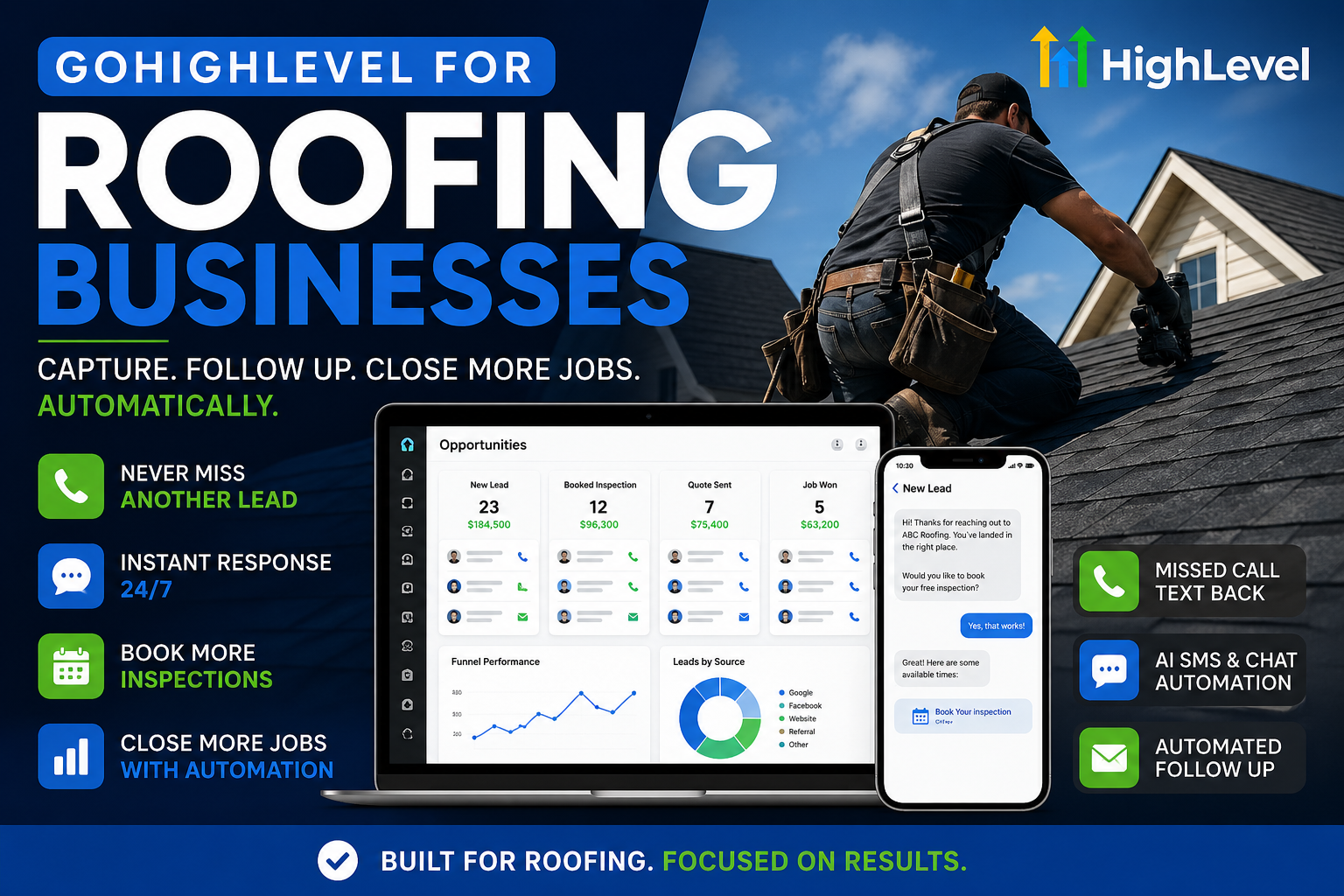
If you’re looking into GoHighLevel for roofing, you’re not trying to “organise leads.”
You’re trying to fix what’s already costing you jobs.
A homeowner fills out a quote form after a storm. It sits until the morning. By then, they’ve already spoken to two other roofers.
A call comes in while your team is on-site. It gets missed. No voicemail. No follow-up. Gone.
A quote is sent for a £9,000 roof replacement. No one follows up properly. The customer “goes quiet” — and ends up choosing someone else who stayed in touch.
It doesn’t feel like a system problem.
It is.
And this is exactly where GoHighLevel works — when it’s built around how roofing businesses actually operate.
Where Roofing Companies Quietly Lose Revenue
Most roofing businesses don’t struggle to generate leads.
They struggle to handle them consistently.
Storm damage jobs come in waves. Urgency is high. Response times slip.
Insurance-related enquiries need more back-and-forth. They sit in inboxes.
Homeowners almost always get multiple quotes. If you’re not the one following up, you’re not the one getting the job.
Meanwhile, everything is happening across:
- phone calls
- website forms
- Facebook messages
- emails
There’s no single system holding it together.
So leads get missed. Follow-ups don’t happen. Quotes go cold.
Losing two or three decent jobs a month — £8k, £12k, £15k jobs — isn’t unusual.
It’s just not tracked.
What GoHighLevel Looks Like When It’s Built for Roofing
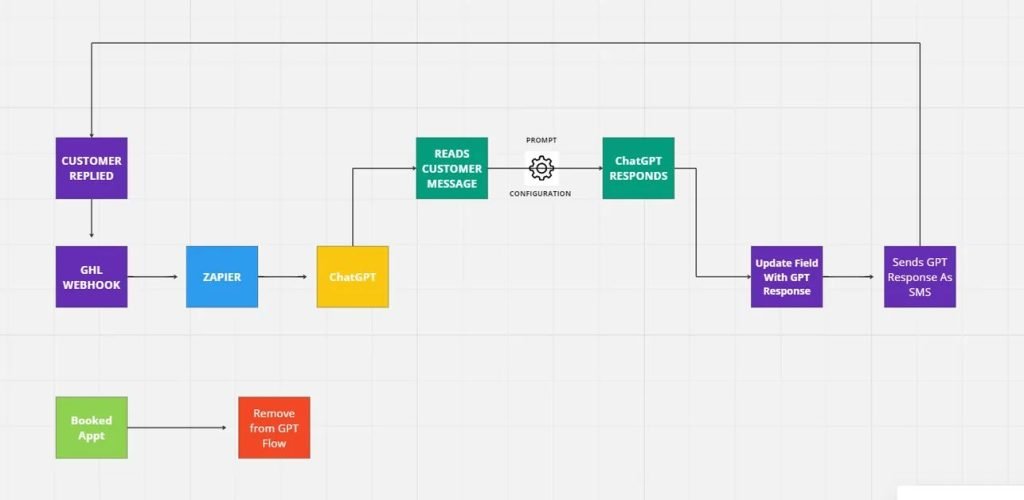
When GoHighLevel is set up properly for a roofing business, it doesn’t feel like a CRM.
It feels like everything between enquiry and booked job finally works.
A lead comes in through your website or ad. Instantly, it’s captured as a contact and pushed into your pipeline as a new opportunity, tagged by source and job type.
Within seconds, they get a response. Not a generic autoresponder — a message that acknowledges the job and pushes toward the next step.
If it’s an inbound call that gets missed, a text goes out immediately asking if they still need help. That alone recovers a surprising number of jobs.
At the same time, the system is already trying to book them in.
They’re sent a calendar link based on the type of job — inspection, quote, emergency repair — with your real availability built in. No back-and-forth. No delays.
Internally, your team gets notified with full context.
The lead hasn’t just “come in.” It’s already moving.
See our guides on
- GoHighLevel for cleaning companies
- GoHighLevel for construction and building
- GoHighLevel for window and door installers
What Happens If They Don’t Book Straight Away
This is where most roofing businesses lose the job.
The lead doesn’t book immediately. It sits. Someone plans to follow up. It gets forgotten.
Inside GoHighLevel, that doesn’t happen.
If a lead doesn’t book within 10 minutes, a follow-up SMS is triggered checking if they still want to arrange a visit.
If there’s no reply, another message goes out the next morning referencing their property enquiry and offering a couple of time slots.
If they engage but don’t confirm, they’re nudged again later that day.
This isn’t spammy. It’s structured.
Homeowners expect some follow-up — especially when they’ve actively requested a quote. The difference is consistency.
Every touchpoint is logged. Every reply is tracked. The pipeline updates automatically based on their behaviour.
You’re not relying on memory – a problem many home services businesses face
From Inspection to Quote to Closed Job
Once a visit is booked, the system shifts from chasing to guiding.
Reminders go out before the appointment so no-shows drop.
After the inspection, when the quote is sent, the follow-up sequence changes.
If the quote hasn’t been accepted within a couple of days, a message goes out asking if they have any questions. If they still don’t respond, another message follows referencing common concerns — price, timeline, insurance.
You’re staying present without chasing manually.
This is critical in roofing because most customers are comparing quotes.
The contractor who follows up professionally — not aggressively, just consistently — tends to win.
Meanwhile, inside the pipeline, that job moves from:
- new enquiry
- to booked inspection
- to quoted
- to won or lost
You can see exactly where things are stalling.
Why Speed to Lead Wins Roofing Jobs
Roofing isn’t like other services.
When someone has a leak or storm damage, they don’t wait around.
They contact multiple companies and go with whoever responds quickly and sounds organised.
That’s why missed call text-back and instant response systems inside GoHighLevel matter so much.
A missed call isn’t lost. It triggers an immediate message.
A late-night enquiry isn’t ignored until morning. It gets acknowledged instantly.
That speed doesn’t just improve response rates.
It positions you as the obvious choice before competitors even reply.
Why Most Roofing Businesses Get GoHighLevel Wrong
A lot of roofing companies try to set this up themselves.
The platform gives you pipelines, workflows, automations — everything is there.
But without a clear structure, it falls apart.
Leads come in but aren’t routed properly.
Pipelines don’t reflect real job stages.
Automations either don’t trigger or trigger at the wrong time.
Messages feel generic because they’re not built around real scenarios like insurance claims or urgent repairs.
The result is a system that technically exists, but doesn’t actually support the business.
GoHighLevel isn’t difficult — but it has to be built around your process, not the other way around.
Building the System Around Your Roofing Business
Every roofing business has its own mix.
Some rely heavily on storm-driven work. Others focus on planned replacements. Some deal with a lot of insurance jobs, others don’t.
The setup needs to reflect that.
Pipelines are built to match your actual stages.
Workflows are structured around how your team responds and books.
Tags separate emergency jobs from standard quotes.
Calendar routing ensures urgent jobs don’t get stuck behind routine inspections.
Nothing is overcomplicated. It’s just aligned.
What Changes Once It’s Working
When the system is in place, the difference is noticeable quickly.
Leads are responded to immediately, even when you’re on-site.
Bookings happen faster because there’s no friction.
Follow-up becomes consistent without anyone having to remember.
Quotes don’t just get sent — they get followed up automatically.
And for the first time, you can actually see what’s happening.
Where leads come from. Where they drop off. What’s converting.
Instead of guessing, you’re working with real visibility.
What It Actually Takes to Set Up Properly
This isn’t a one-day setup.
A proper GoHighLevel build for a roofing business typically takes 2–4 weeks.
That includes mapping your current process, building pipelines, writing and testing workflows, setting up calendars, and making sure everything connects properly.
There’s also a testing phase — because until real leads move through it, you don’t know where the gaps are.
Rushing this is where most systems fail.
A Roofing Lead Handling System Should Do Three Things
At a minimum, your system should:
- Respond to every enquiry instantly
- Move leads toward a booked inspection without friction
- Follow up consistently until the job is won or lost
Anything less, and you’re relying on manual effort.
And that’s where jobs get lost.
See How This Would Work in Your Roofing Business
At this point, it’s not about whether GoHighLevel works.
It’s about how it’s set up for your business.
Where leads are coming in. Where they’re being lost. Where follow-up is breaking down.
That’s what needs to be mapped.
If you want to see how this would actually look — from enquiry to booked job, with real workflows and pipelines built around your operation — the next step is straightforward.
Book a strategy call or request a system audit.
We’ll walk through it properly and show you exactly where the gaps are — and how to fix them without adding more complexity.
